Why Am I So Scared to Play After My ACL Surgery?

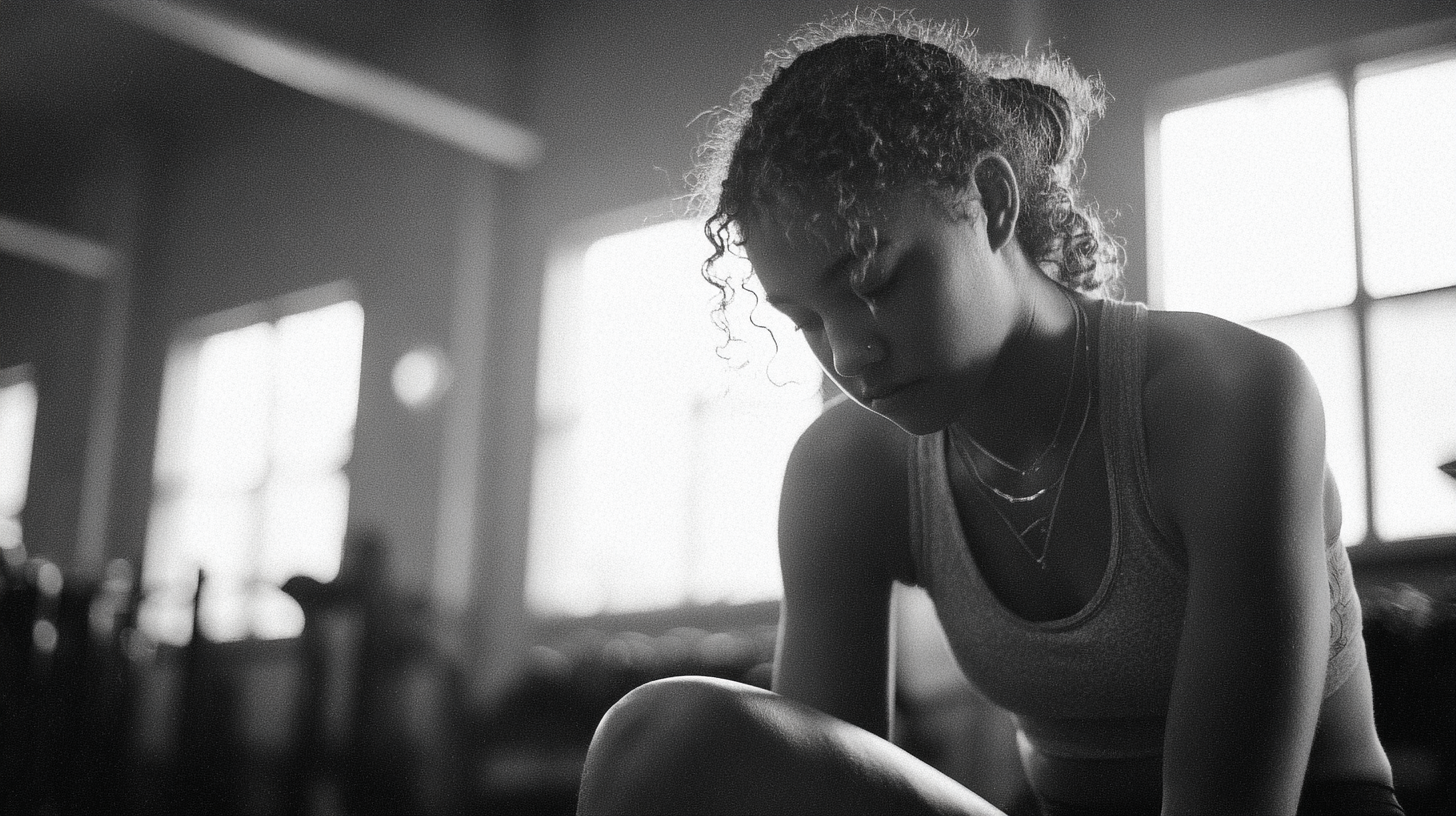
Re-injury fear after ACL surgery is a normal nervous system response, not weakness. Your brain remembers the original injury and scans for threat signals even after physical clearance. Female athletes experience 2-6 times higher re-injury fear than males due to biological factors including hormones, joint mechanics, and the intensity of the original trauma. Managing this fear requires state-first mental training alongside your physical rehab—not willpower alone.
You're back on the field. Cleared by the surgeon, strength numbers looking solid from PT. But that first cut? Your body screams "danger" even though everything checks out physically. Heart races. You hesitate. Pull back on 50/50 balls. The fear hits hard—what if it pops again?
You're not weak. You're human. And you're not alone.
Last month, a D1 basketball player told us she faked ankle tape just to avoid explaining why she sat out contact drills three weeks post-clearance. The fear was that real.
Why Does ACL Re-Injury Fear Hit Female Athletes Harder?
Research shows women face 2-6 times higher re-injury fear after ACL tears compared to guys. It's not "in your head"—it's biology and experience colliding. Your nervous system remembers the pop. Hormonal fluctuations affect joint laxity across your cycle. Landing mechanics put different stress on female knees. Even the way the original injury happened—often non-contact in women—stacks the deck toward heightened caution.
The difference between surviving your return and owning it isn't about being "mentally tough." It's about training your state: helping your nervous system recalibrate from threat mode to challenge mode. When your internal state shifts, your knee confidence follows.
In Dr. Auerbach's work with 500+ collegiate athletes returning from injury, those who implemented state-first mental training showed 40% faster return-to-confident-play compared to athletes who focused solely on physical rehab. The mental training didn't eliminate fear—it built the capacity to perform in a different nervous system state.
What Creates Confident Play After ACL Surgery?
Locked-in athletes build systematic readiness over 4-8 weeks, not sporadic confidence attempts the night before competition. They work five distinct practices: catching fear signals early, reality-checking catastrophic predictions, stacking micro-evidence their knee holds, accessing confident states through mental cues, and involving their team strategically. This creates a foundation that compounds over weeks.
Your physical rehab took months of progressive overload. Your mental readiness follows the same principle: consistent work, progressive exposure, measurable markers.
Athletes who start state-work during physical rehab—not after clearance—return to confident play 30-40% faster. The timeline matters because your nervous system needs repetition to recalibrate, just like your quad needed progressive resistance to rebuild.
How Do I Build Mental Readiness for Return-to-Play?
Start by mapping your current state patterns, then build daily readiness work, and finally create pre-game activation protocols. This three-phase approach mirrors your physical PT: assessment, foundation building, sport-specific preparation. Most athletes need 4-8 weeks of consistent daily practice to feel confident in game situations after physical clearance.
Phase 1: Map Your State Patterns (Week 1)
Before you can shift your state, you need to understand what moves you from ready to threatened. The Performance Readiness Map is a 10-15 minute assessment built on validated sport psychology frameworks (ACSI-28) that reveals how your nervous system tends to respond when stakes feel high. Not a test or grade—just one more data point so you're not guessing.
One soccer player discovered her re-injury fear spiked specifically during her menstrual cycle's luteal phase. Another found contact drills triggered more threat response than full-speed cutting. You can't adjust what you haven't named. ($25, first assessment free to try)
Phase 2: Build Daily State Awareness (Weeks 2-6)
Five minutes each morning: Spot your earliest fear signal. Is it somatic (tight chest, shallow breathing) or cognitive (catastrophic thoughts, hesitation in visualization)? Catch it there, name it, practice the state shift before you're on the field.
Then stack evidence through progressive exposure. Not full scrimmage day one. Five controlled cuts at 50% speed. Notice how it felt. Next session, 60%. Stack proof your knee holds. Reality-check your catastrophic predictions with actual data. How many cuts felt solid? What's your quad strength now vs. pre-injury?
Mettle Coach provides a private space to talk through these patterns as they emerge—"I'm noticing more fear before weekend games than weekday practice." The AI reflects what it hears, names what you might be feeling, and offers one small next step to try. It's the thread that holds context across weeks: Which conditions created ready states? What triggers shifted you to threat mode?
Phase 3: Activate Pre-Competition (Week 7+)
Pick one phrase that clicks for you. "Knee's strong, I'm smooth." Practice it feet planted, eyes on target, squeezing your quad. Repeat 300+ times in low-stakes conditions. The cue works when competition arrives because you've practiced the state shift repeatedly.
One college soccer player visualized 50 perfect cuts nightly while activating her phrase and feeling her quad strength. First game back? Locked in, no hesitation. The cue worked because she'd trained the state shift, not just memorized words.
Why Does Systematic State-Work Beat Sporadic Confidence Attempts?
Your nervous system learns through repetition and progressive exposure, not sporadic intensity. Daily five-minute state-shift practice builds stronger neural pathways than occasional 30-minute visualization marathons before big games. Consistency beats intensity for recalibrating your internal state from threat detection to readiness.
In Dr. Auerbach's work with athletes returning from injury, those using structured state-shift protocols showed measurably different pre-game nervous system responses after 4-6 weeks of daily practice compared to athletes relying on sporadic visualization before competition. The shifts stick because they're practiced in low-stakes conditions first, then progressively applied to higher-pressure situations.
State-first training isn't about "being confident." It's about training your nervous system to access ready states even when fear signals appear. The fear doesn't vanish—you just perform from a different internal state.
How Long Until I Feel Confident in Game Situations?
Most athletes need 4-8 weeks of systematic daily practice to feel confident after physical clearance. This timeline assumes consistent state-work, not sporadic confidence attempts before big moments. Your physical rehab took months—mental readiness follows the same progressive overload principle.
The timeline varies based on three factors: severity of original injury (complete tears take longer neurologically), quality of mental training (systematic state-work beats generic tips), and support system (teammates and coaches who validate fear help). Athletes who start during physical rehab typically return to confident play 30-40% faster.
One crucial pattern: readiness doesn't return linearly. You'll have strong days that feel like you're back, then setbacks that feel like starting over. This is normal nervous system recalibration. The athletes who succeed expect this pattern and don't catastrophize the rough days.
Should I Tell My Coach About My Fear?
Yes, tell your coach—but frame it as readiness optimization, not weakness. Most coaches respect athletes who advocate for what they need. Use specific language: "I'm tracking my readiness in lateral movements. Can we build progressively from 50% speed?" This gives your coach a clear action step instead of vague concern.
The conversation works best when you come with data, not just feelings. "I've been tracking my state in practice—it's confident in drills but shifts to threat mode in scrimmages" gives your coach something concrete to work with.
If your coach dismisses the fear or pressures you to "just get over it," that's a red flag about the coaching environment, not about your readiness. Sometimes confidence struggles need expert intervention beyond daily training. Having access to sport psychology professionals when state-work needs specialized support provides complete backing.
What If I've Done Everything Right But Still Feel Scared?
Fear that persists despite strong rehab numbers, progressive exposure, and daily state-work may signal one of three things: you're moving too fast in your return protocol, there's underlying anxiety extending beyond the knee injury, or your nervous system needs more time to recalibrate. None of these mean failure—they mean your system needs a different approach.
Some athletes need 12+ weeks of mental training, not 6-8. Some need to address generalized anxiety separate from sport injury fear. Some need specialized protocols that go beyond systematic daily approaches.
If you've been consistent with state-work for 8+ weeks and fear still prevents normal play, that's the signal to bring in expert support. You're not broken—you just need specialized intervention to help your nervous system make the shift from threat to ready states.
Key Takeaways
ACL re-injury fear is nervous system protection, not psychological weakness. Female athletes face 2-6 times higher fear levels due to biological and experiential factors. The solution isn't eliminating fear—it's training your nervous system to access ready states alongside fear signals.
State-ready athletes catch fear signals early, reality-check catastrophic predictions, stack micro-evidence through progressive exposure, practice state-shift cues in low-stakes conditions, and strategically involve their support system. This approach takes 4-8 weeks of consistent daily practice, mirroring the timeline and consistency principles of physical rehab.
Your first move: map your current patterns. Take the Performance Readiness Map to understand what shifts you from ready to threatened. Then build one small experiment this week: five controlled cuts at 50% speed, logged after each attempt with state-check notes.
Ready to Build Your Return-to-Play Readiness?
Mettle combines Dr. Alex Auerbach's 15+ years of sport psychology expertise with state-first training designed for youth athletes navigating high-pressure situations.
Performance Readiness Map: 10-15 minute assessment revealing how you respond when stakes feel high. Built on validated sport psychology frameworks (ACSI-28), it shows your readiness across seven key factors and provides a 30-day readiness-building plan. Not a test or grade—just one more data point so you're not flying blind. ($25)
Ready Coach: Private conversational space (chat + voice) where you can talk through what's going on in your head without judgment. Built on Dr. Auerbach's sport psychology frameworks, it reflects what it hears, names what you might be feeling, and offers one small next step to try. Progressively learns your patterns and holds context across all your work. (Free to start conversation, ongoing access $19/month)
Ready in 20: Targeted state-shift sessions (~20-30 minutes) built around specific mental challenges. Example: FROM "pressure is a threat" TO "pressure is my shot." Grounded in Single Session Intervention research and evidence-based approaches. Complete in one sitting, designed to create measurable state shifts. (Included with Mettle Coach subscription or available individually - Coming soon Spring 2026.)
When systematic training needs specialized human expertise—complex anxiety patterns, trauma recovery, or crisis support—Mettle connects you with sport psychology professionals who understand the nuances of return-to-play mental challenges.
Start with Readiness Map | Chat with Ready Coach
About Alex Auerbach: Dr. Alex Auerbach is a sport psychologist with 15+ years of experience working with collegiate and professional athletes through injury recovery and return-to-play challenges. His state-first approaches to re-injury fear and performance readiness have been systematized through Mettle's platform, making expert mental training accessible to student-athletes daily.
Questions? team@mettle.coach